
Imagine a world where the music you listened to was controlled by the state. Imagine having to meet a dealer down a dark alleyway just to listen to The Beatles latest track. Even more unbelievable, imagine listening to this music on a discarded x-ray of someones rib cage. This was the reality from the 1940s to the 60s throughout the Soviet Union.
I won’t give you a history lesson, I’m sure you know all about the iron curtain… okay maybe I’ll give you a little one. A blockade between the Soviet Union and the rest of the Western world. Jospeh Stalin didn’t want anything contaminating his mighty nation. Most certainly not Western culture. This included music, clothing trends, types of dance, basically anything which had a hint of individualism and creativity. But, as always, there were rebels to his rule.
World War II had been over for a few years. The youth wanted to move on and live their life to the maximum. They wanted to sing, dance and party. They had heard murmurs from the other side of the Iron Curtain. Many of their parents were soldiers during WWII, and many of those soldiers bought Western culture back to the Soviet Union. New music, instruments, radios and technology found its way into the USSR this way. And many Russians wanted to see even more of it.
A new youth subculture was forming. The ‘Stilyagi’ as they were known were young adults and teenagers who embraced Western culture, to the dismay of the state. They were branded as ‘hooligans’ and ‘a threat to Russian culture’. But they didn’t care.
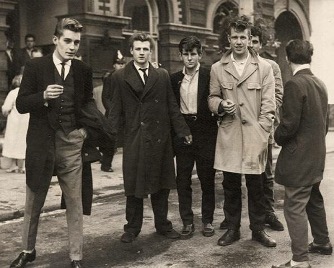
They dressed like Westerners, they danced like Westerners and they behaved like Westerners. Just like many oppressed groups throughout history, they found ways to stick their middle finger up and rebel against the rule. An underground subculture of music lovers and bootleggers ran rampant. They snook around and found ways to listen to the forbidden music. Artists such as The Beatles, Ella Fitzgerald, The Beach Boys and Elvis were all banned. Aswell as many ‘emigre’ musicians (Russians who had left the country or rebelled against the state) such as Pyotr Leschenko and Alexander Vertinsky. Basically all Jazz was also forbidden, as well as rhythms such as Tango and Foxtrot. But the Russian youth was creative, and they found unimaginable ways of listening to all of this and more.
As mentioned on the fascinating, informative website, ‘https://www.x-rayaudio.com/x-rayaudiohistory‘, “Every family had at least one member in the Gulag”. This was where much of the ’emigre’ music had become popular. Songs about violence and jealousy or love and lust were all deemed ‘low culture’ in Russia, but they found their way through the gulags and therefore back to many families throughout the state.

The ‘stilyagi’ had everything the Russian citizens weren’t meant to have. Street enterprise, cultural resistance, technical ingenuity, and human endeavour. Using these qualities, they found genius ways of living the life they wanted. They would use their technical ingenuity to build their very own recording machines, with a very unique twist to them. As mentioned earlier, they would use discarded x-rays to record this music on to. Yes, literal x-rays of peoples chest or ankle or ribcage or whatever body part they could get their hands on, even hands.
How did they even get the discarded x-rays you may be asking, well that was the easy bit. Hospitals had a huge overflow of x-rays, and were more than happy to get rid of them. So the young Russians would use their street enterprise to trade some vodka or money in order to get their hands on as many discarded x-rays as they could.
From here they would cut them into 7 inch disks, use a cigarette to burn a hole in the middle, and get recording. As you’d expect the quality wasn’t great, almost unlistenable in fact, almost being the key word. All of a sudden it was possible to listen to this new, exciting music. Rock ‘n’ roll snook it’s way across the Iron Curtain and there was no getting rid of it. It was here to stay.
Perhaps the most difficult and risky part of all of this was actually getting your hands on these records. Imagine meeting a drug dealer in Stalin’s Russia. Imagine the nerves and risk involved. Well this is what it felt like. And they weren’t even being rewarded with drugs. This was all for music.
Starting in St. Petersburg before spreading to Moscow and beyond, you would head down to a dark, dodgy alleyway and keep your eyes pealed. Many of these dealers would wear large coats where they can stuff as many x-rays as possible in their pockets, up their sleeves, down their pants, anywhere they can find some space. Make sure there’s no police about and approach this large coated individual. Give them some money or maybe a little vodka, and away you go.
As mentioned earlier, the quality of these records was not great to say the least. But that just goes to show how hungry many Russians were to get a taste of culture. The x-ray records would only last maybe 10 plays before being unusable. What do you do then? Get back out and buy some more. For two decades this was the norm for many Russians.
It’s all very ‘1984’ isn’t it. These brave citizens going against the ‘thoughtpolice’ and ‘big brother’ in an attempt to live with just a hint of freedom. This was over half a century ago, you would think the world would’ve moved on and these problems would no longer exist. All music should be available to all ears. But travel to Iran or North Korea in 2023 and you’ll find that is far from the truth. If you do travel to Iran or North Korea (if you’re lucky enough) then maybe take some x-rays with you, show them this article and watch the citizens thrive.

If you’ve read this far I presume you’re interested in hearing these x-ray records. Check out https://www.x-rayaudio.com. They have all sorts of information and multiple documentaries to check out. Aswell as fascinating audio of these records. Listen for yourself just how bad the quality was at https://www.x-rayaudio.com/x-rayaudiorecords.
This fascinating case study just goes to show how important music and culture is to people. Whether it’s people in 1940s Russia or 1980s Japan (see my last ‘around the world’ article here, ‘https://jacksjukebox7.wordpress.com/2023/10/02/japanese-city-pop-how-a-music-genre-gave-false-promises-of-a-capitalist-utopia-and-why-it-has-sneaked-into-modern-western-youth-culture/‘) music will always be a way for people to showcase their hunger for freedom and a better, more hopeful world.
We will keep exploring different countries and different cultures here at JacksJukebox as we look to find just what it is about the magic of music that brings people together, no matter how oppressed or miserable these people are. Let me know where we should explore next in this series 🙂
 jacks.jukebox
Leave a comment