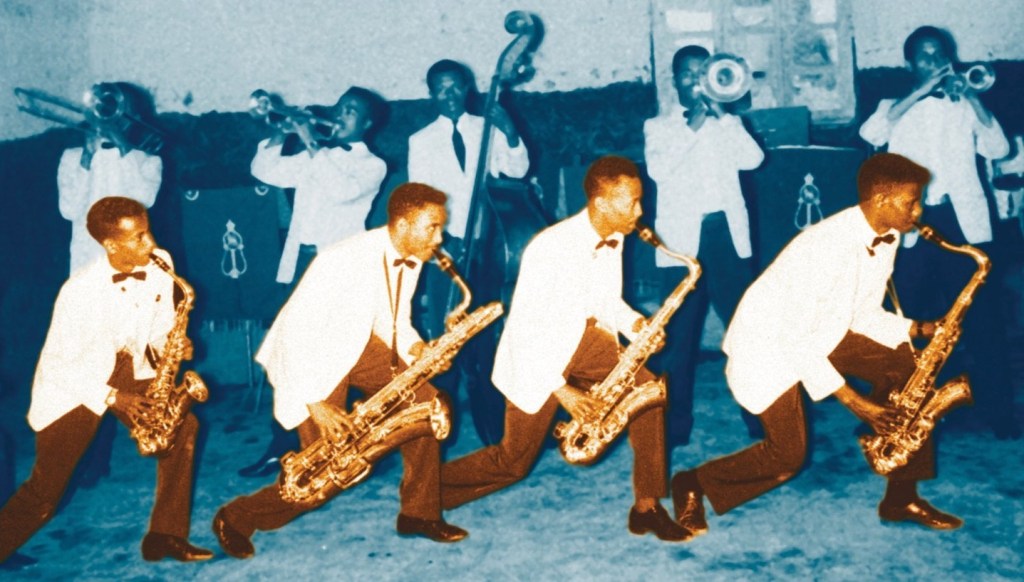
September 11th 1974. Addis Ababa, the capital city of Ethiopia, is alive with the sounds of youth, culture and hope. But this wouldn’t last. The music has stopped and the sun has risen, the whole country about to witness a seismic, soviet change. Has the music stopped forever?
“Whether it’s Ethiopia or Japan or Russia, music is always a constant in the fight against repression and censorship. And one thing is for sure, the music will always outlive the repressors.”
The Derg Regime – Not the Biggest Music Fans
On September 12th 1974, a Marxist-Leninist, Soviet-backed party forcefully took over the Ethiopian government and overthrew the Monarchy. The previous Emperor, Haile Selassie, was murdered a year later (not revealed until 1994) by the Derg Regime, the new rulers of the country.
If you have already read my previous ‘Around The World’ post, ‘Jazz on Russian Bones’, you’ll know all about how the Soviets weren’t the biggest fan of Western culture and music, to say the least. So the following won’t come as a great surprise to you.
The Derg Regime all but killed any culture this vibrant country had built up. Strict curfews killed the nightlife of Addis Ababa, whilst many musicians were arrested or deported, simply for sounding like a Western artist.
Ethiopian Jazz had built quite the following within the country throughout the 50s and 60s, but suddenly it was gone. Completely gone. Popular tunes were banned and banished from history, being replaced by empty and soulless songs filled with patriotism and fear.
But not everyone gave up on the music. The proclaimed ‘Father of Ethiopian-Jazz’ was determined to save his son.
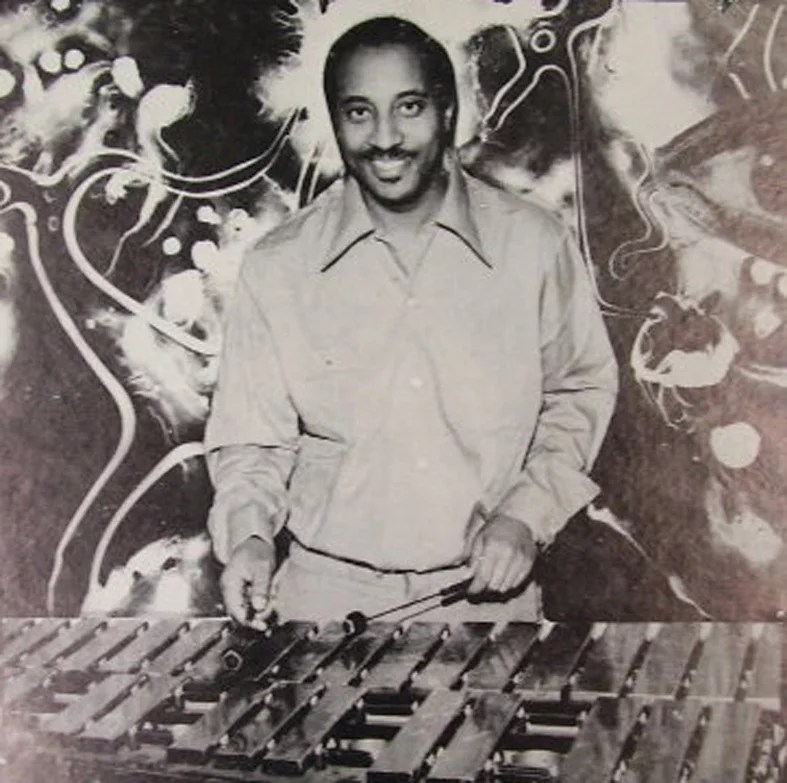
Mulatu Astatke – The Father of Ethiopian-Jazz
Although many musicians ended up in either jail, a different country, or 6 feet under, there was one specific man that was able to keep the music playing.
Before we find out how he preserved his countries sound, let’s start at the beginning of his journey.
Born to rich parents in 1943, Mulatu Astatke found himself lucky enough to travel to Britain in the 1950s to study. He moved to Wales at 16 to study aeronautical engineering. Oblivious to the journey he was about to go on.
Whilst in Britain he fell in love with music, especially Jazz, and went on to study at the Trinity College of Music in London before moving across the pond and becoming the first African to study at Berklee College in Boston.
After deepening his knowledge of Jazz and Latin music, he returned to his native Ethiopia in 1969, discovering an upsurge of activity in the arts and entertainment world, along with the booming nightlife.
Taking influence from many western jazz musicians including Duke Ellington, Mulatu combined his western influences with the music he grew up on, and coined the term ‘Ethio-Jazz’.
Unlike many musicians, Mr. Astatke opted to remain in his home country after the Derg Regime took power. He remained as a music teacher and continued to make music at a time when many couldn’t. He was in the fortunate position where his fame, families fortunes and apparent support for the Soviet regime allowed him to keep the music playing. The vast majority did not have this luxury. Especially ‘enemies of the state’ such as ‘Ayalew Mesfin’.
Ayalew Mesfin – The Ultimate Rebel
Astatke’s music was an inspiration to those all over Ethiopia. Maybe the most notable and important of his prodigies was Ayalew Mesfin.
Whereas Astatke was happy to just play his music, Mesfin wanted more. He wanted freedom. His style was confrontational, rebellious and in your face. He risked everything in an attempt to keep the music alive. Most notably, his own life.
Under the Derg Regime Mesfin was arrested early on, placed under house arrest for 13 years, had his possessions seized, and his music banned. This would be enough to kill most people’s passion. But not him.
After 13 long years of being unable to produce music… to be himself, the Derg Regime was overthrown. As the Soviet Repupblic fell in 1991, the Ethiopian People’s Revolutionary Democratic Front (EPRDF) took power of the country. Despite the over-desperate attempts to sound fair with its name (people’s, revolutionary AND democratic, alright we get it), the EPRDF was far from revolutionary or democratic.
After thinking his hell was over, the worst was yet to come for Mesfin. He released the album ‘Peace for Ethiopia’, which did not go down too well with the new leaders.
Finally able to play live again, Mesfin was in dreamland. He was showing the crowds what they’d missed out on for 13 years, full of dynamism and aura, life was good. And then lighting very nearly struck.
Just after a performance in Nazareth, Mesfin put his mic down just as 3500 watts of energy surged through it. This new ‘revolutionary’ and ‘democratic’ party attempted to assassinate one of its countries greatest artists in plain sight. This was a clear enough message for Mesfin. He left the country, moving to Denver, USA and never looked back.
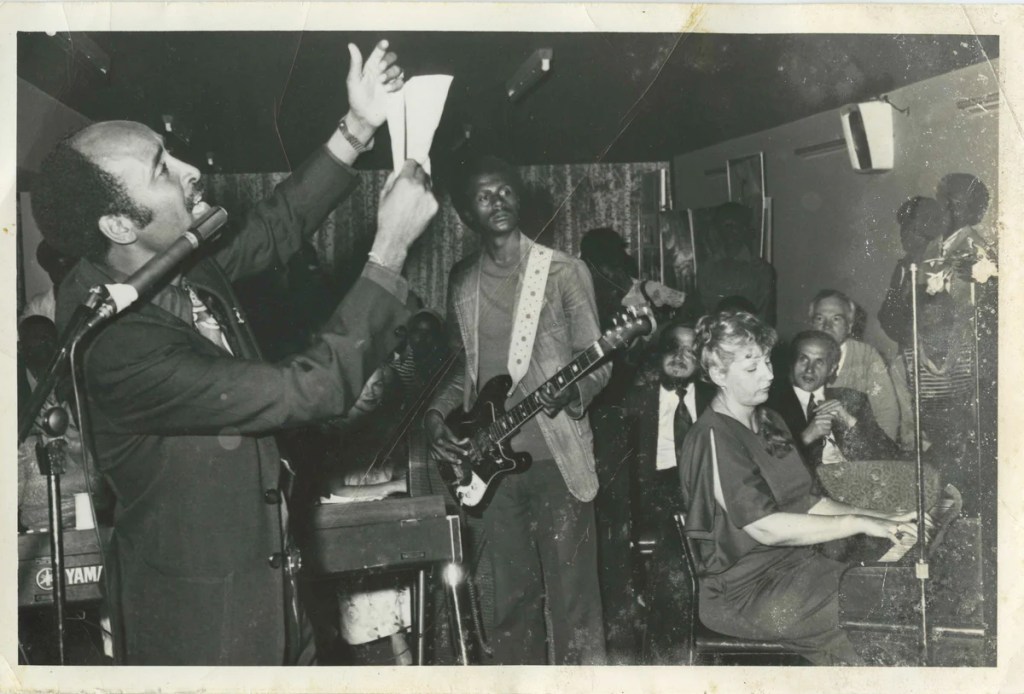
Today, Ayalew Mesfin has a massive impact on many songs you know and love. World-renowned producer, Madlib, has cited Mesfin as a great influence of his, with his music being sampled by Madlib himself aswell as greats such as Jay-Z and Kanye West.
Without that attempted assassination, who knows if modern day hip-hop would have that Jazz infused influence which makes it so great. Thanks Ethiopian People’s Revolutionary Democratic Front, I guess.
The revivals of Ethio-Jazz
For many years, Ethio-Jazz was confined to the borders of Ethiopia. This was until an unlikely French hero popped up.
Francis Falcetto (couldn’t sound more like a fictional French musician if you tried) decided to create 40 compilation albums of varying Ethiopian musicians. Named ‘Ethiopiques’, these albums bought a whole new audience to the countries unique sound. Available today on streaming platforms, you can find out what I’m talking about right now. I’m listening to Volume. 4 right this very second, why don’t you join me.
Although Mr. Falcetto may not be the hero you’d hope for (claims of original artists not getting paid, and questions over where the money ended up) he certainly introduced many people to this music who never even knew it existed. Including some guys you might have heard of, Nas and Kanye West? Heard of them yeah? ‘As We Enter’ by Nas and ‘The Game’ by Common (produced by Kanye West) both used Ethio-Jazz samples, just to name a couple.
The genre had another renaissance in the last few years. But how, I hear you ask. You guessed it. Just like Japanese City Pop (learn all about that here), TIKTOK !! I don’t know too much about TikTok, never used it. The word on the street is it’s a Chinese spying tool?? They must be desperate to know what 13 year old Chloe from Durham is up to. I don’t know. However, it seems to be the number one source of discovering music these days. Whether that’s good or not, or if it even matters, is a discussion for another day. All I know is that it’s been prevalent in the resurgence of two great genres and ages of music in Ethio-Jazz and Japanese City Pop. Long live TikTok and China !
Both Mulatu Astatke and Ayalew Mesfin are still going strong today, spreading the word and always expanding the unique and forceful sound of Ethiopian music.

The recurring themes of this ‘Around The World’ series on the Jukebox continue to pop up everywhere I look. Whether it’s Ethiopia or Japan or Russia, music is always a constant in the fight against repression and censorship. And one thing is for sure, the music will always outlive the repressors… The proof is in the pudding. Speaking of which, i’m off to have a knickerbocker glory and listen to some Ethio-Jazz.
Cya next time.
 jacks.jukebox
Leave a comment