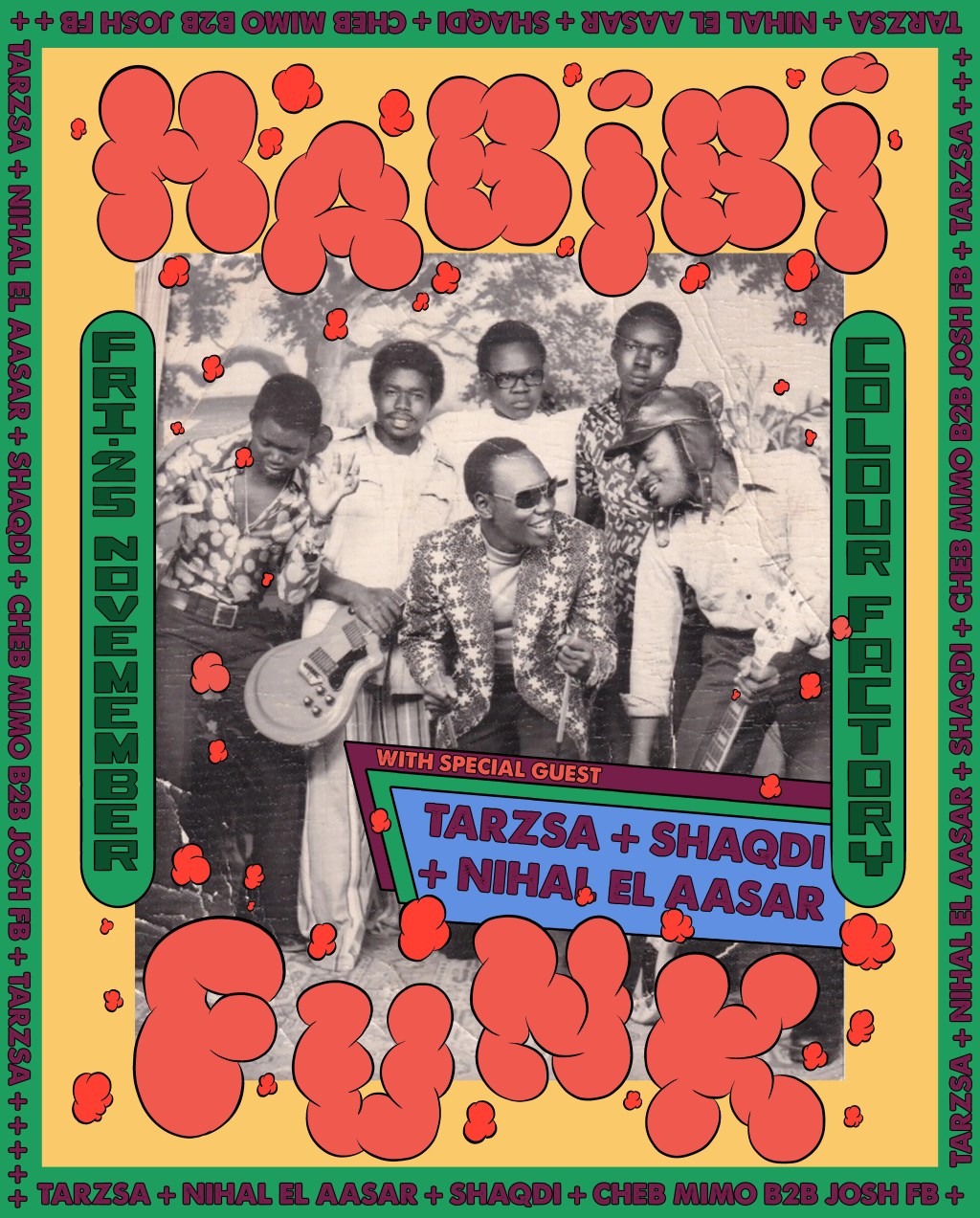
“I randomly walked the streets of Casablanca and came across this super tiny shop with broken electronics.” This is how German DJ, Jannis Stürtz, came across Arabic funk for the first time. An encounter which would ripple into a huge resurgence for the once forgotten genre.
What is Habibi Funk?
2012. Morocco. Relatively unknown DJ, Jannis Stürtz, is playing at a festival in Rabat. Little did he, or anyone, know just how significant this trip would be.
Whilst on a stroll down the streets of Casablanca, Stürtz came across a small shop full of random junk and broken electronics. As you would, he ventured in. This is where he first discovered the power of Arabic funk.
Whilst peering through the record collection the shop possessed (it used to be a popular record store before closing down, hence it retained a small collection of vinyl) Stürtz came across a name he recognised. One of these Arabic albums curiously credited James Brown on the reverse of the record. It turned out to be a cover of his tune ‘Papa’s Got a Brand New Bag’. Being a lover of funk and soul, Stürtz of course purchased it. Leading to his discovery of a completely forgotten genre of music – Arabic Funk.
Stürtz delved deep into the genre and wanted others to experience the groovy sounds of the Arab world. Already running a record label, Jakarta Records, he used his experience to create a new reissuing label and called it ‘Habibi Funk’.
He would go on to find music ranging from Libyan Reggae to Lebanese Folk, and everything inbetween, and re-release it to the modern and western world. Thanks to him you could open Spotify right now and experience it in all its beauty. Go ahead and do it… once you’ve finished reading this of course.
Cultural Appreciation vs Cultural Appropriation
“We are not an NGO, we are not a political group – we are first and foremost a record label” Stürtz tells The Independent, “But given the specific content and the context we are working in, it has political components and we are very well aware of it.”
In any interview you read with the Habibi Funk founder, it is abundantly clear just how aware he is of his Western heritage. He knows that he wasn’t there to experience Arabic funk in real time. He knows that he can’t truly relate to the artists experiences. But he also knows that the stories are just as important as the music.
Every release under Habibi Funk is accompanied with extensive booklets, photos, interviews, anything that can help tell the story of the music.
They make sure to avoid using cultural stereotypes, opting to use striking family photos as album covers, rather than pyramids or camels or any lazy connection to the Arab world.
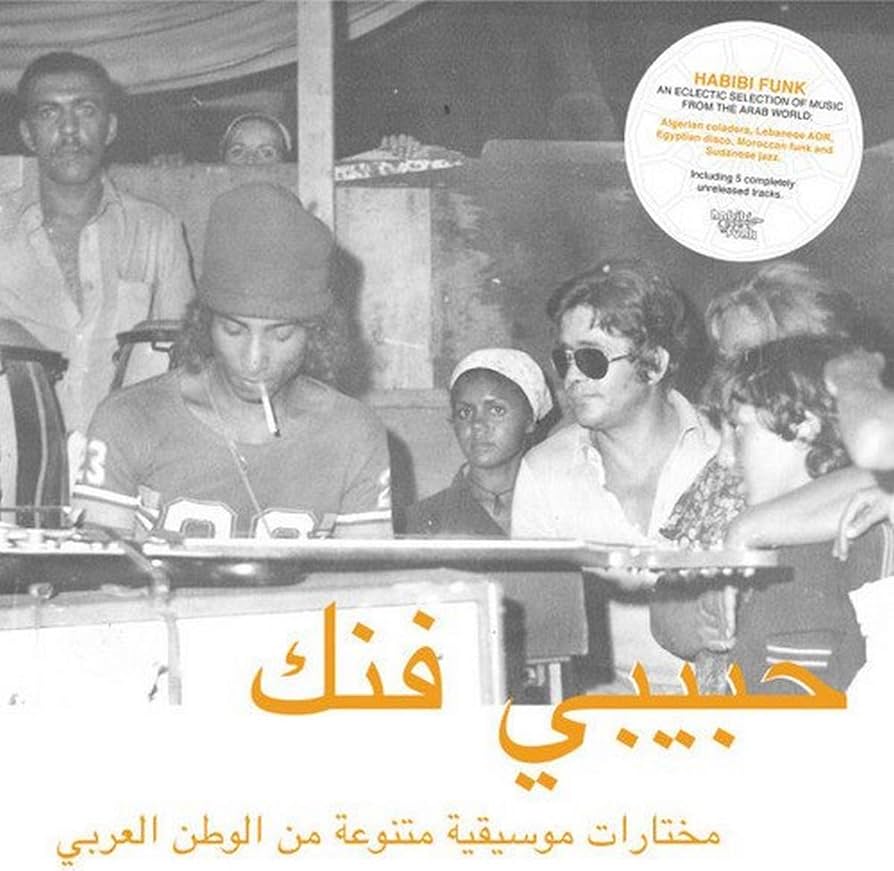
Another point of importance to Stürtz is the word ‘discover’. Habibi Funk did not discover any of this music. It’s always been there. They’ve simply just found it for themselves. Similar to Christopher Columbus ‘discovering’ the New World.
“When you’re coming from the west, and you’re dealing with cultural goods from the region, I guess ‘discover’ is a historically complicated term.”
Breaking away from ‘post-colonialism exploitation’
Not only is it the importance of avoiding cultural exploitation, but financial exploitation is just as much of a problem.
Similar record labels exist, spreading the music of a lesser known country and culture to the Western world. But problems usually arise. And it usually links back to the true killer of this world – greed.

Whether it’s politics or entertainment or sports, most problems can be directly linked to greed. And it’s no different in the music industry.
The latest entry into this ‘Around The World’ series had a perfect example. The Ethiopiques albums which have propelled Ethiopian Jazz into the minds of Europe and the US were produced by a Frenchmen. And surprise, surprise – the original artists and their families saw virtually no money from these releases.
In a perfect world I shouldn’t have to praise Jannis Stürtz and Habibi Funk for splitting the profits with the original artist or their family, but unfortunately it’s a rarity.
With every release they make sure to license all the music directly with the original artist and ensure a 50/50 split on all profits.
The self-awareness and dedication to accurately representing Arabic music and culture can only be praised. Most people just simply wouldn’t care as long as their pockets are being lined.
But what about the music itself?!
Enough about greed and politics, let’s talk about music… Well maybe with a hint of politics.
If you’ve never listened to any sort of Arabic funk, or any genre of Arabic music, I’ve got the perfect tune for you to start with.
Do you like the Beegees? Good. You’ll love this then – ‘Ya Aen Daly’ by Najib Alhoush. Sampling the Gibb’s brothers classic, ‘Stayin’ Alive’, it’s a perfect introduction into a foreign genre. Listen to it here:
Nahib Alhoush has a fascinating story, he could’ve had a whole article about himself. His music saw him fall into trouble with the Gaddafi regime in Libya, leading to his music being forgotten both abroad and in his home land. This was until Jannis Stürtz found it of course. Just one of countless examples of Habibi Funk reviving music from the brink of permanent death.
Albums I’d recommend you checking out include ‘El Fen’ by Ahmed Malek, and Habibi Funk’s first full-length contemporary album release, ‘Marzipan’ by Charif Magarbane.

Hopefully the success of Habibi Funk and the way they go about their business will only inspire others to follow. Hearing unearthed, niche, foreign music can only be healthy for your brain. Here’s to finding more and more of these stories, when I do you’ll be the first to know about it.
Check out the rest of the ‘Around the World’ series where we explore the likes of USSR, Japan and Ethiopia. And whilst you’re at it giz’ a follow on Twitter and Insta will ya. Cheers 🙂
 jacks.jukebox
Leave a comment