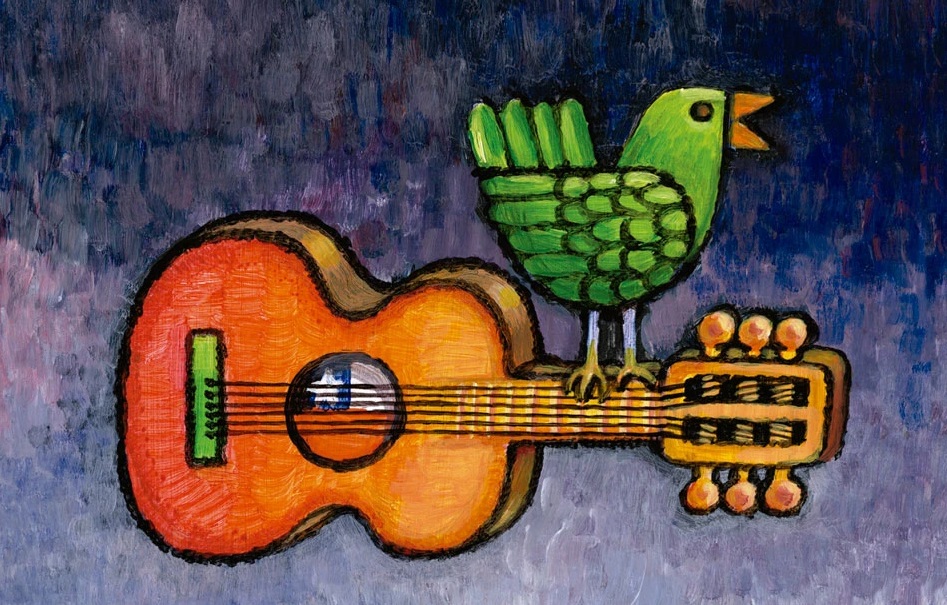
Fasten yourself in for the ride. A story which begins with dreams of hope, community and revolution. But very quickly turns into a nightmare of despair, political interference and death. This is the story of Nueva Cancion – 20th Century Latin American Folk Music.
1960s Latin America, a region full of utopian dreams… constantly pegged back by the harsh realities of the modern world. They had just watched Cuba revolt, they wanted… no, NEEDED a taste of this ‘freedom’, they often felt it at their fingertips, alas… it forever seemed to drift away.
Whether Argentina, or Uruguay, or Paraguay, or Chile, the story was always the same. An ineffective government widening the gap between the wealthy and the impoverished, the common person needing an outlet. And as is so often the answer, what became this outlet? You guessed it, music.
“You can’t have a revolution without songs”
President Allende
The origins of Nueva Cancion
Music has been used as a tool of political and social empowerment in Latin countries for centuries. Back in the 15th century there were many ‘songs of conflict’ throughout the period of the reconquest of Spain.
But the earliest direct roots of Nueva Cancion date back to the early 1800s during the Mexican war of independence. Many ‘corridos’ (a tale or poem which forms a balled) were heavily influenced by political and social struggle. This carried through into the Revolution in the early 1900s, and eventually found its way re-emerging in the mid 20th century as what we now know as Nueva Cancion.
Now, we’ve already noted how political tension was a key factor for the re-emergence of traditional Latin Folk music, but politics isn’t everything…
Many people were just sick of the music of the time. European and American tunes dominated the airwaves, true Latin culture was becoming scarce. People were sick of the commercial influence of Western culture and music. They wanted their traditions back.
Step forward two heroes – Chilean, Violeta Parra and Argentinian, Atahualpa Yupanqui.
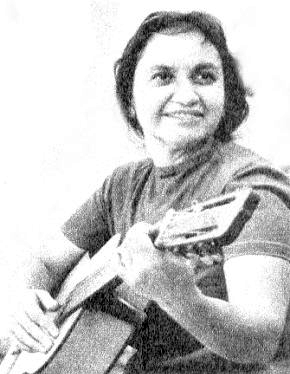
The Folklore of Violeta Parra
The story of Violeta Parra transcends music. She, almost single-handedly, restored traditional Chilean culture and without her there would likely be no Nueva Cancion, and subsequently no political activism to the extent there was (keep reading to hear all about that).
She began travelling the country in 1952, along with her two children, finding and gathering over 3000 traditional folk songs of peasant origin. She curated them and released a book titled “Cantos Folkloricos Chilenos” (Chilean Folk Songs).
Countless working class and unheard voices were now listened to throughout Chile, this would not have been possible without the endeavour and spirit of Violeta Parra.
However, this wasn’t even the pinnacle of her accomplishments, believe it or not. Throughout the 60s, Parra operated a Pena, or a “folkloric tavern”. Basically a music studio, this is where the majority of Chilean Folk music was created during the 60s. The biggest musicians of the time originated there, including ‘Patricio Manns’, ‘Rolando Alcaron’, and (keep an eye out for this name) ‘Victor Jara’.
Her work at the time also inspired the two biggest Nueva Cancion groups in Chile, ‘Quilapayun’ and ‘Inti-Illimani’. Check out one of the best tunes this genre has to offer, ‘La Muralla’ by ‘Quilapayun’. It’s truly beautiful.
Parra died in 1967 but her legacy lives on forever through Nueva Cancion.
Late 60s/Early 70s – What could go wrong?
Thanks heavily to the work of Violeta Parra, and the talent of the likes of Victor Jara, Nueva Cancion could not be more popular and present during the late 60s.
As the political left surged in popularity throughout the region, so did the music. Two major festivals signified the popularity and importance of the genre. The first was held in Havana, Cuba and led to the government creating a ‘Protest Song Centre’ in the city to help preserve this form of political music.
This led to a follow-up festival in Santiago, Chile where the musicians heavily supported the leftist ‘Popular Unity Party’, led by ‘Salvador Allende’.
In a rare feat of success and celebration throughout this ‘Around The World‘ series, Allende and his party won the 1970 Presidential Elections, marking the first democratically elected socialist government in Latin America.
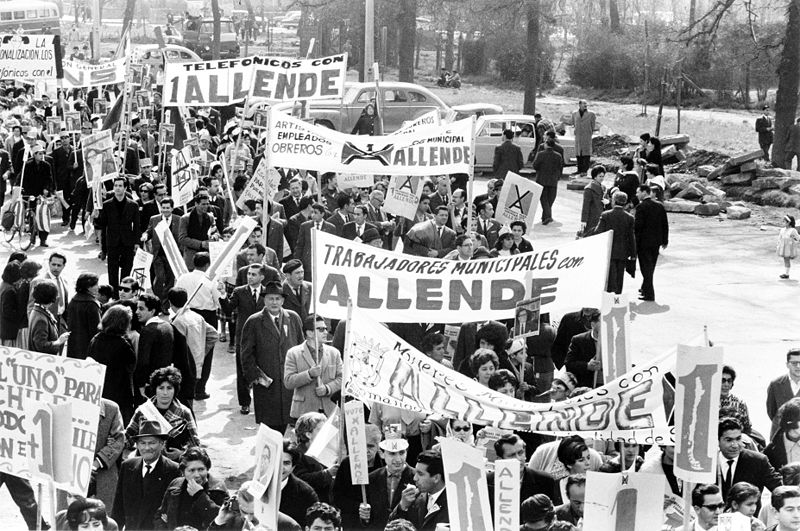
After so many years of political unrest and despair, the people finally felt as if they had done it, they had achieved this ‘freedom’ they were so, so desperate for.
As Allende took the stage to greet estatic fans for the first time, a powerful banner positioned above him read – “You can’t have a revolution without songs”…
The power of music had shone brighter than ever, the engaging and powerful sentiments of Nueva Cancion had led to real change… to realistic hope.
The groups mentioned earlier, ‘Quilapayun’ and ‘Inti-Illimani’, were now receiving funding from Allende’s government. This utopian future which always seemed so far away had finally become reality… or so they thought.
Pinochet, murder, and ‘Apagon Cultural’
All good things must come to an end. 1973, three years after Allende’s historic victory, it all came crashing down.. quite literally.
In a military coup led by ‘Augusto Pinochet‘, Allende was killed as the presidential palace was bombed (Allende actually committed suicide as troops surrounded the palace). As was the case so often in the region, it later transpired that the USA and CIA were involved in the coup.
Brutal scenes followed as Pinochet’s forces captured over 5000 civilians and imprisoned them in a football stadium. Here they were free to torture, interrogate and murder as they please. A regime that killed over 3000 of it’s own citizens and tortured around 40,000 more, this was a far cry from the hopeful scenes of 1970.
After three years of music being heavily promoted and even funded by the government, it was now forbidden. Overnight, Pinochet demanded all Nueva Cancion recordings were seized, burned and banned from the airways. The government arrested and exiled any artist they could get their hands on. Even the traditional instruments used in Chilean folk music were banned. This led to a dark era of Chilean history known as ‘Apagon Cultural’ (Cultural Blackout).
And there was one specific incident that angered the people and created a “symbol of struggle for justice”…
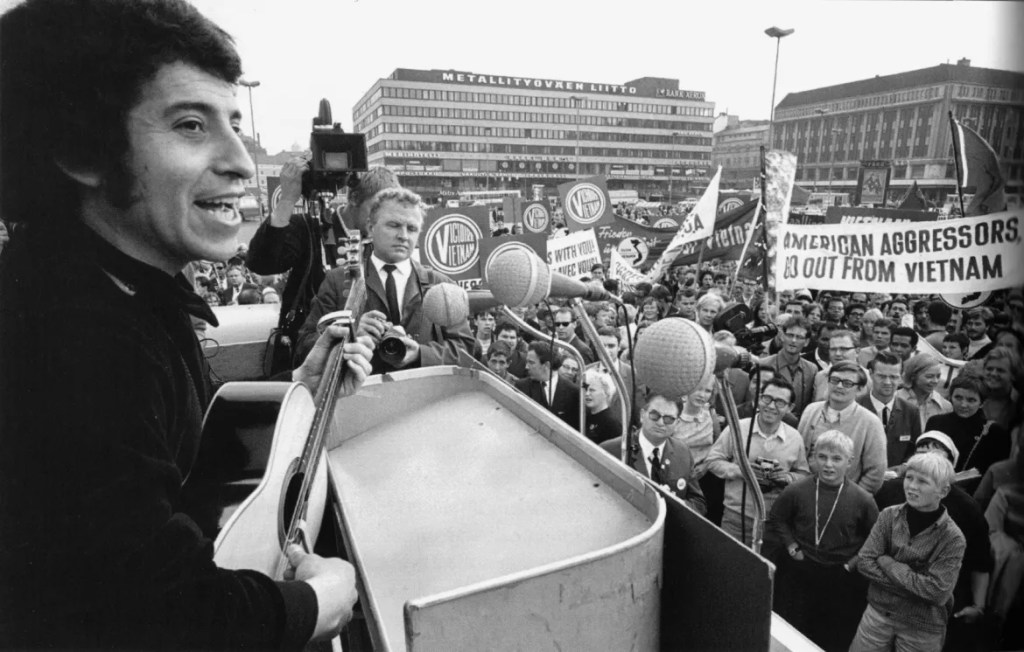
The murder of Victor Jara
I told you to remember his name earlier. Victor Jara was one of, if not THE, biggest and most popular Nueva Cancion artist. Straight out of Violeta Parra’s Pena, Jara was even an official cultural ambassador for Allende’s previous government. You could say he represented everything Pinochet stood against.
So maybe this won’t come as much of a surprise. Jara was arrested very shortly after the coup. For days Jara was beaten and tortured. He’d had both wrists broken as interrogations continued. To call this an interrogation feels wrong. It just sounds like pure cold-blooded murder to me.
After days of torture, he was finally discarded of. They shot him 44 times and dumped his body on the streets of Santiago. His wife wrote at the time, “his belly ought to have been a gory, gaping void.” Nice.
After his wife secretly buried him in Santiago cemetery, Jara became a symbol of the fight against Pinochet’s regime. His lyrics had spoke so strongly on the themes of love, peace and social justice. So for him to be so brutally murdered made him a martyr type figure throughout the country.
Nueva Canción will never die
However Jara wasn’t the only musician to suffer… Pinochet’s regime saw nearly all Nueva Cancion artists exile out of the country, if they were lucky enough to not be arrested or murdered.
Inti-Illimani and Quilapayun found exile and did not return to Chile for 15 years. Other major artists such as Patricio Manns had a similar story. But this did not kill the spirit of Nueva Cancion. It just re-ignited it.
The people adapted. As time went on, and Pinochet’s governance became more normalised, musicians found ways to evade the ban of the music.
They began to innovate and find loopholes to keep the sound alive. By performing in politically neutral environments such as churches, community centres and the few remaining Pena’s, they found the government wouldn’t interfere.
As time went on, people got braver and new music began to find its way back onto the airwaves. Canto Nueva took the place of Nueva Cancion. Less overtly political, the government allowed Canto Nueva to thrive. The artists just had to adapt.
This new form of folk music was heavily metaphorical and hid the political messages below layers of symbolism. Live performances often included introductions to explain the songs true meaning, and as time went on, all those exiled artists began flooding back into Chile.
Quilapayun and Inti-Illimani returned in the late 1980s and continued touring well into the 21st century.
Did Pinochet defeat the music?
No, he didn’t. Chile finally saw a future of peace as a country, when Pinochet’s military dictatorship ended in 1989 after a successful referendum led to the peaceful transition of Chile into a democracy.
As is so often the case in this ‘Around The World’ series, the music gets silenced. Censorship occurs, arrests happen, and murders shock everyone. However, eventually, when the dust settles and the suppressor is in that very dust (about 6 feet down, if you get my drift), what’s left standing on their grave? That’s right, the music.
I have one final positive note to add to this story… just last year 7 retired soldiers were arrested and charged with the murder of Victor Jara. 15 year sentences in prison, all 7 (already elderly) men will die in jail. Justice finally served, it only took 50 years.
Go listen to this Nueva Cancion album on Spotify, it is genuinely beautiful music… the best music I have discovered so far during this series. I even went as far as ordering it on vinyl from Italy for 40 euros. Worth every penny.
‘Around The World’ returns next Monday as we take an in-depth look at a form of pop music stuck in the middle of a civil war. See you then.
 jacks.jukebox
Leave a comment